


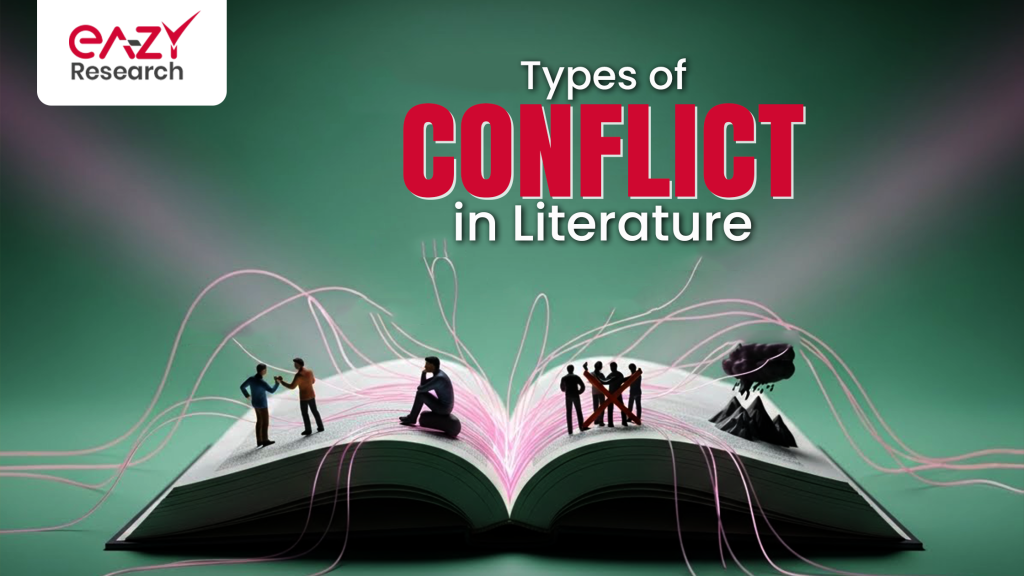
Conflict is a vital aspect of narration as it gives the tension and difficulties that propel narratives. All powerful stories depend on contests to develop personalities, determine actions, and affect the readers on an emotional level. In the absence of conflict, the plots would have no way to go, the characters would not be a living, breathing thing, and the stories would be flat and one-dimensional.
Understanding the types of conflict in literature allows readers and students alike to analyse stories more deeply, identifying how struggles, both internal and external, define character development and thematic expression. Conflicts display human feelings, social pressure, and moral dilemmas in both classic books and modern short stories, and thus, the story proves to be relevant and engaging.
Such discussion of the literary conflict will be in the different forms that they occur, their importance, as well as how the identification of the conflict would contribute to a better understanding and appreciation of literature and the human condition.
Types of Conflict in Literature
Most great literary works are fuelled by conflict. It builds tension, builds characters, and involves the reader because it offers challenges that have to be overcome. Understanding the types of conflict in literature is essential for anyone studying narratives, as it allows a deeper appreciation of how stories unfold. From the traditional novels to the modern short stories, conflict serves as the plot, giving a reflection of human nature and the problems of society. This paper will discuss some of the types of conflicts writers use, their definitions, and their contribution to storytelling.
Clarification of Conflict in Literature
In essence, conflict in literature is a battle between conflicting forces. The conflict literature’s meaning extends beyond simple disagreements; it involves obstacles that characters must confront, whether internal or external. These struggles tend to place moral dilemmas, personal ambitions, or social pressures, and this is what makes the story interesting.
Types of Conflict in Literature
When we examine the types of conflict in literature, we can categorize them broadly into internal and external conflicts. Internal conflicts take place inside the mind of a character, which is usually based on feelings, wants, or moral choices. External conflicts, on the other hand, involve outside forces such as other characters, societal norms, or natural events. For example, in Shakespeare’s Hamlet, Hamlet’s indecision and internal struggle about revenge represent internal conflict, while his disputes with Claudius illustrate external conflict. Being aware of these differences will enable the students and literary lovers to analyze stories better and become more aware of the characters’ motivations.
Internal Conflict: Intra-personal struggle
Man versus self. Internal conflict is a primary feature in many stories. It is possible that a character is torn between guilt, fear, or indecision, and this will affect the actions and eventually the plot. Understanding the conflict definition literature clarifies how writers use psychological tension to create depth.
External Conflict: Forces Beyond Control
External conflict occurs when a character faces challenges outside of themselves. This form may take the shape of conflict with other characters, society, or even nature. External conflict often drives the plot forward, producing dramatic tension and compelling storytelling. As an example, Santiago in The Old Man and the Sea by Ernest Hemingway fights with the marlin and the intense sea, which is an evident struggle outside.
Man vs. Man: Human Conflicts
One of the most common types of external conflict is man versus man, where characters face opposition from other individuals. These clashes in literature may be a simple dispute between two individuals or a grand war, and they tell a lot about the character traits, motives, and moral decisions. Understanding what conflicts in stories are allows readers to identify these interactions and appreciate their narrative function.
Man vs. Nature: Standing up to Nature
Another form of external conflict is man versus nature. In these stories, characters are put to the test through storms, animals, or disease, which are elements of nature, and the way they endure and exploit their intelligence. By studying the definition of external and internal conflict, readers can appreciate how authors balance inner turmoil with external pressures to create layered storytelling.
Man vs. Society: Social Tussles
A third important external struggle is conflicts that are against what is expected by society. The motifs in Man versus Society are injustice, discrimination, and cultural norms that confront the protagonist. To Kill a Mockingbird by Harper Lee illustrates this kind of person, where Atticus Finch fights against prejudice in society, as he defends an innocent man. External conflict in such stories reflects broader social commentary, often encouraging readers to question norms and empathize with marginalized perspectives.
Man vs. Technology and Supernatural Forces
Conflicts with technology or with the supernatural are often a part of modern literature and provide external struggle with certain additional dimensions. Characters can fight super-machines, artificial intelligence, or some other supernatural powers that they do not know.
Reading More about Internal Conflicts
Interpersonal struggles tend to be between ethical decisions, needs, or anxieties. One of the characters can want a personal benefit but be afraid of social judgment, which provokes a conflict that leads the plot. These dynamics exemplify types of literary conflicts where internal challenges influence character growth and story progression.
Five Forms of Conflict
Literature scholars often identify five forms of conflict: man versus self, man versus man, man versus society, man versus nature, and man versus technology or supernatural. Forms may overlap each other, forming extremely complicated layers of tension. Knowing these five forms will enable readers and students to analyze literature in a better way, giving them a clear sense of when it comes to plot and character dynamics. These categories also serve as a foundation for assignments, such as when seeking an Assignment Writing Service for literary analysis.
War in Short Stories and Passages
Conflicts can be summarized and still be effective in short stories and literature passages. Readers may be asked to identify them in exercises such as which conflicts are revealed in the passage, and select two options. These are tasks that demand analytical excellence, as one has to identify internal and external conflicts. A short text could, say, describe how one of the characters is scared to fail (internal), and how he/she is facing an enemy (external). Mastery of these distinctions enhances comprehension and equips students for more advanced literary studies, including resources like Primary homework helps online for guidance.
Knowing the Purported Meaning of Conflicts
Literary conflicts are not arbitrary, but they bear a thematic meaning. By exploring the conflict literature’s meaning, one discovers that these struggles often illuminate values, beliefs, and human experiences. A story of struggle with nature can be a story of survival, and interpersonal conflicts can be a story of inequity in society. This interpretation is beneficial to both reading and analysis, as students are able to relate their own experiences to literary themes. Recognizing the meaning behind conflicts also supports deeper engagement when seeking educational assistance, such as Take my online class for me services for guided literature study.
Forms of Conflicts
Conflicts of modern and contemporary literature are often explored, mixing both internal and external struggle. The characters can become psychologically challenged during their struggle through social pressures or technological problems. Recognizing types of conflicts in literature in these works enables readers to appreciate narrative innovation and complexity. Conflicts, on the one hand, are usually disclosed by authors to reflect the existing issues in society, and, therefore, the discussion of this story can be discussed in the classroom, as it can be used as an academic project or even scholarly research. Tools like PhD Thesis Help Online can further support students examining these intricate narrative structures.
The Role of External Conflict in Plot Development
External conflict remains essential for advancing plot and character development. The absence of challenges causes the stagnation of the narratives since people must face a challenge to show growth, resilience, and ethical decisions. From epic fantasy battles to courtroom dramas, external conflict propels action and engages readers. Internal and external conflicts are usually interwoven, so the authors tend to make the events of the story reflect internal ones.
External Conflict in Classic and Contemporary Works
The influence of external conflict can be seen across genres and eras. In traditional literature, such as The Lord of the Flies, external conflicts among the characters mirror greater tensions in the society, whereas in modern-day literature, such as The Hunger Games, struggles against a tyrannical order merge both the physical and social conflict. These conflicts not only involve the reader, but also provide an insight into human behaviour and the societal order. Recognizing these examples enhances both literary appreciation and academic analysis, supporting assignments or research projects with references from authentic sources like Best Master Thesis Help.
Types of Conflict in Literature
Conflict is the core of storytelling, and it forms the story, characters, and theme. From types of conflict in literature to the nuanced exploration of internal and external struggles, understanding these dynamics enriches the reading experience. Literary disputes demonstrate the human condition and enable people to be sympathetic to the characters, challenge societal conventions, and become critical readers.
Regardless of the nature of the literature one is analyzing, be it old literature or new literature, conflict identification and interpretation is a key academic winning factor. Resources such as Take my GED exam for or PhD Thesis Help Online can support students in navigating complex literary analyses, while recognizing the diverse external conflict challenges that stories present.